News / Why a 3D-printed piece can be soft and firm at once
Why a 3D-printed piece can be soft and firm at once
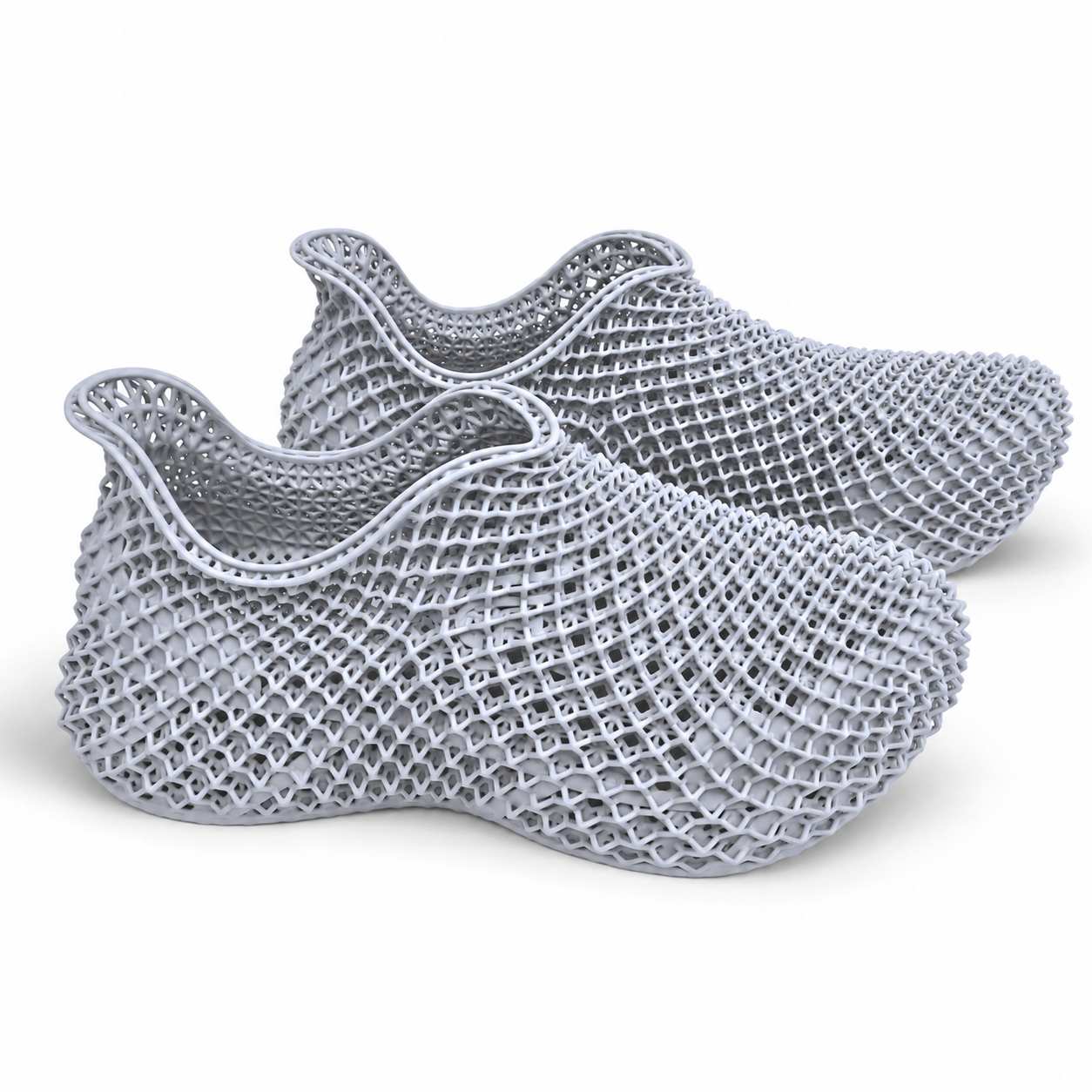
Ask someone to describe a shoe sole and they will usually pick one word: soft or firm. Solid material behaves that way — a slab has a single density, so it is either cushioning or supportive, and the choice is made once for the whole foot. A printed lattice breaks that rule, and the reason is geometric rather than chemical.
Solid material has one behaviour
A moulded foam midsole is made at one density. Where the foot needs cushioning, that density is welcome; where it needs support, the same density gives way. Designers work around this by gluing in inserts, adding shanks, or thickening one area — all of which add layers, and layers are where products eventually separate.
Density becomes a design variable
In a lattice, the material is the same everywhere but the cells are not. Small cells packed closely resist compression; larger cells with more open space compress further before they push back. Change the cell size across a single printed piece and you change how firm each region feels, without changing the material and without adding a second component. A heel can be soft, a midfoot firm, and the transition between them gradual rather than a step.
That is why a printed insole can hold an arch without feeling like a plastic plate under the foot, and why a printed pillow can support the neck at one end and stay soft under the cheek at the other.
Air, moisture and weight
An open lattice is mostly space. Air moves through it, so heat and moisture leave instead of collecting against the body — the same principle whether the product is under a foot or under a head. And because the structure carries load through struts rather than through solid volume, a printed piece can be lighter than a solid one of the same footprint. Lighter is not a marketing point here; it changes how a shoe swings at the end of a leg over a long walk.
What it feels like day to day
Most people do not notice a lattice as a texture. They notice that a shoe does not need breaking in, that an insole does not go flat in the middle after a season, and that a pillow does not need to be flipped to the cool side halfway through the night. The structural reason is the same in all three cases: the shape is doing the work, not a filling that compacts.
Where the lattice shows up
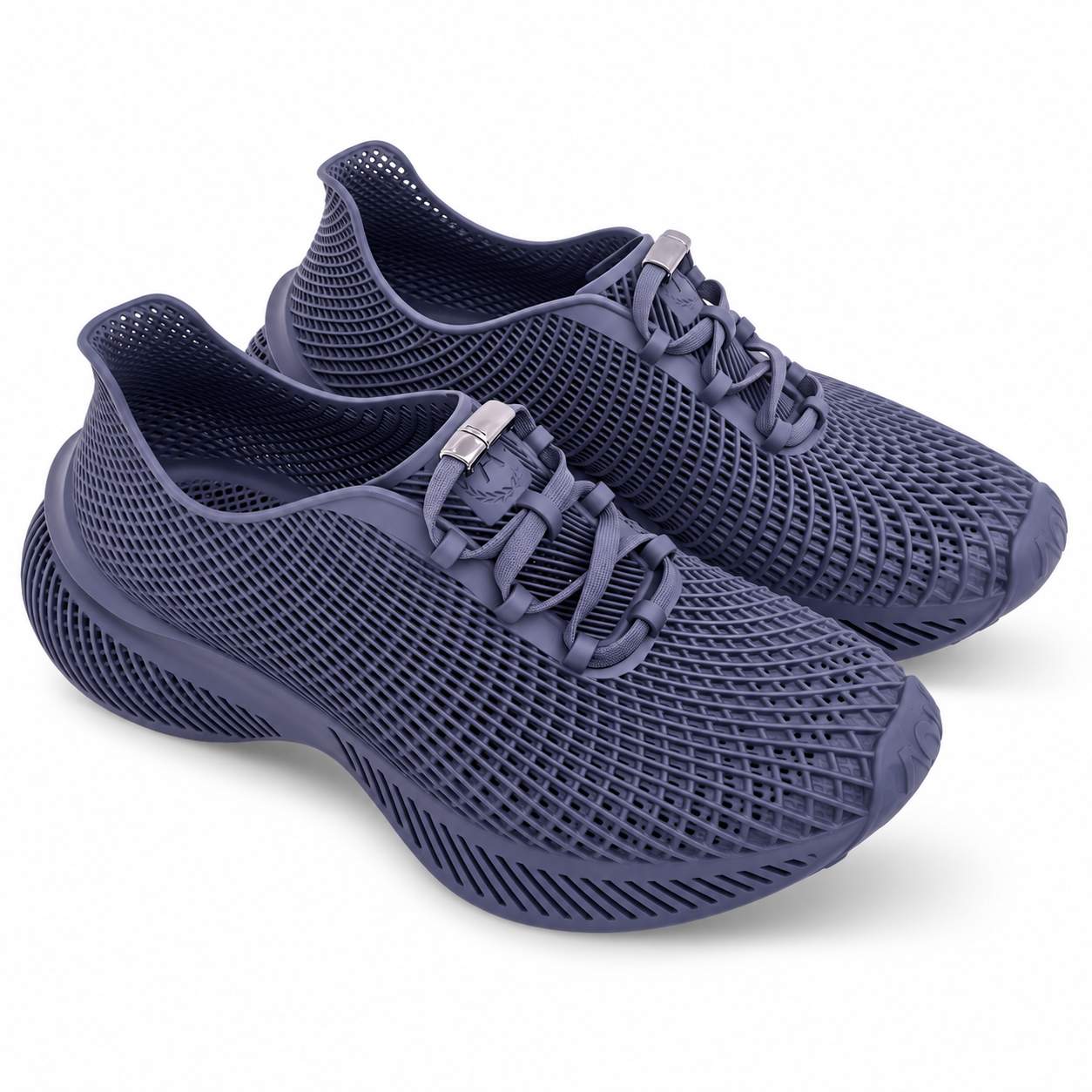
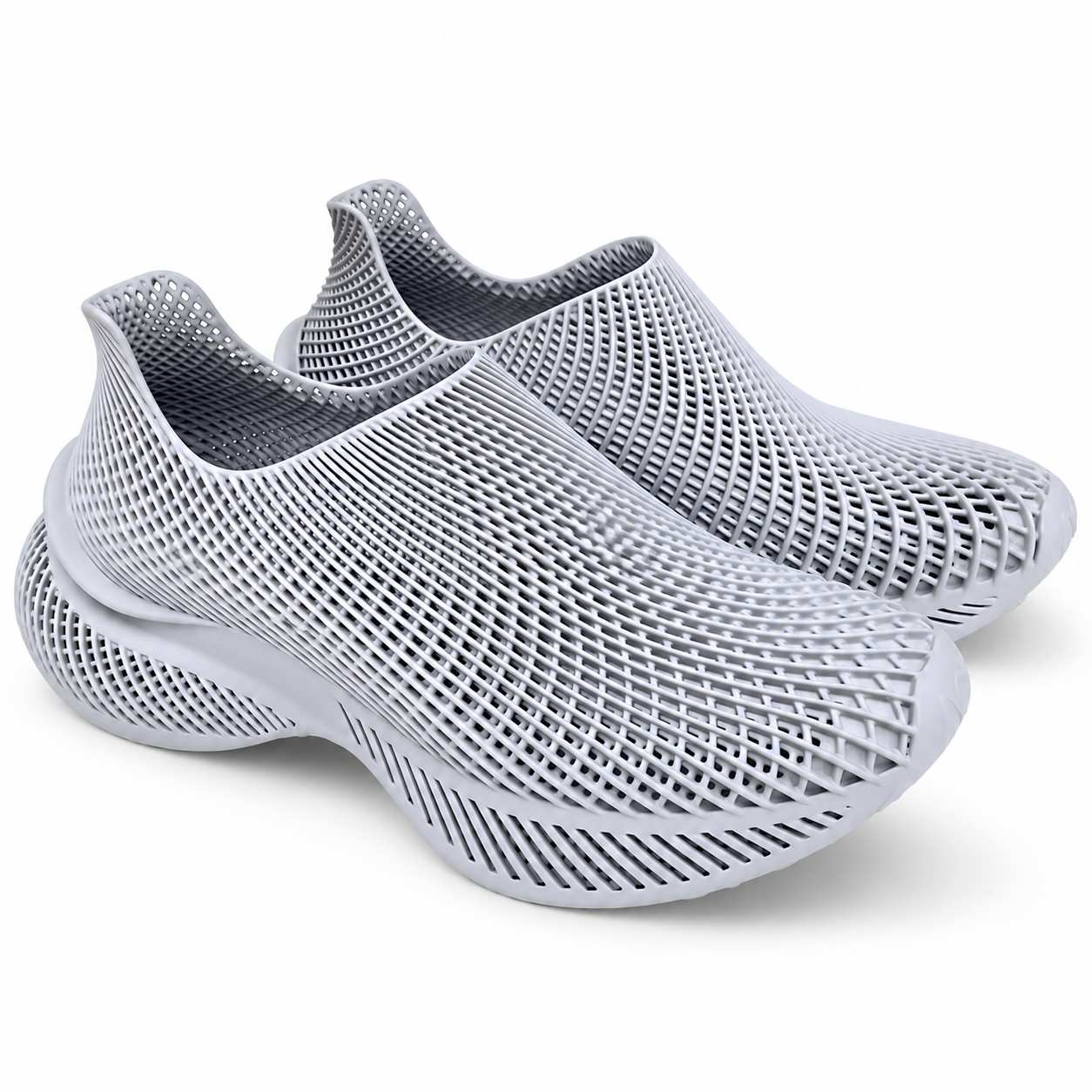
Footwear — a one-piece printed upper and midsole, with zoned density and an integrated arch contour.
Insoles — a printed TPU structure with a denser midfoot, a cushioned heel and a ventilated surface.
Pillows — a nine-zone printed core, with different support heights under the head, neck and shoulders.
What it does not do
A lattice is a structural idea, not a medical one. It changes how a product distributes load and how it feels over a day; it does not diagnose anything, and it does not replace an assessment by a clinician. Our copy stays in that active-health space on purpose: we describe comfort, fit and support, and we leave claims of that other kind alone.
What remains is the practical question every buyer asks — whether the shape suits them. That is answered by measurements, not by the word "lattice".
At a glance
- Category
- Footwear (8 products)
- Price range
- $129.99 – $249.00 USD
- Foot length covered
- 220–295 mm (EU35–EU46)
- Colour options
- up to 8
Where to go next
- 3D Printed Shoes - Next Realm Seriesshoes
 3D Printed Shoes - Elsewhere Seriesshoes
 3D Printed Shoes - Unbound Seriesshoes
XIANKU · Prices in USD · Shop all · About XIANKU · Shipping · FAQ · Contact · Privacy · Terms · Business