News / Custom-fit vs off-the-shelf insoles: what changes
Custom-fit vs off-the-shelf insoles: what changes
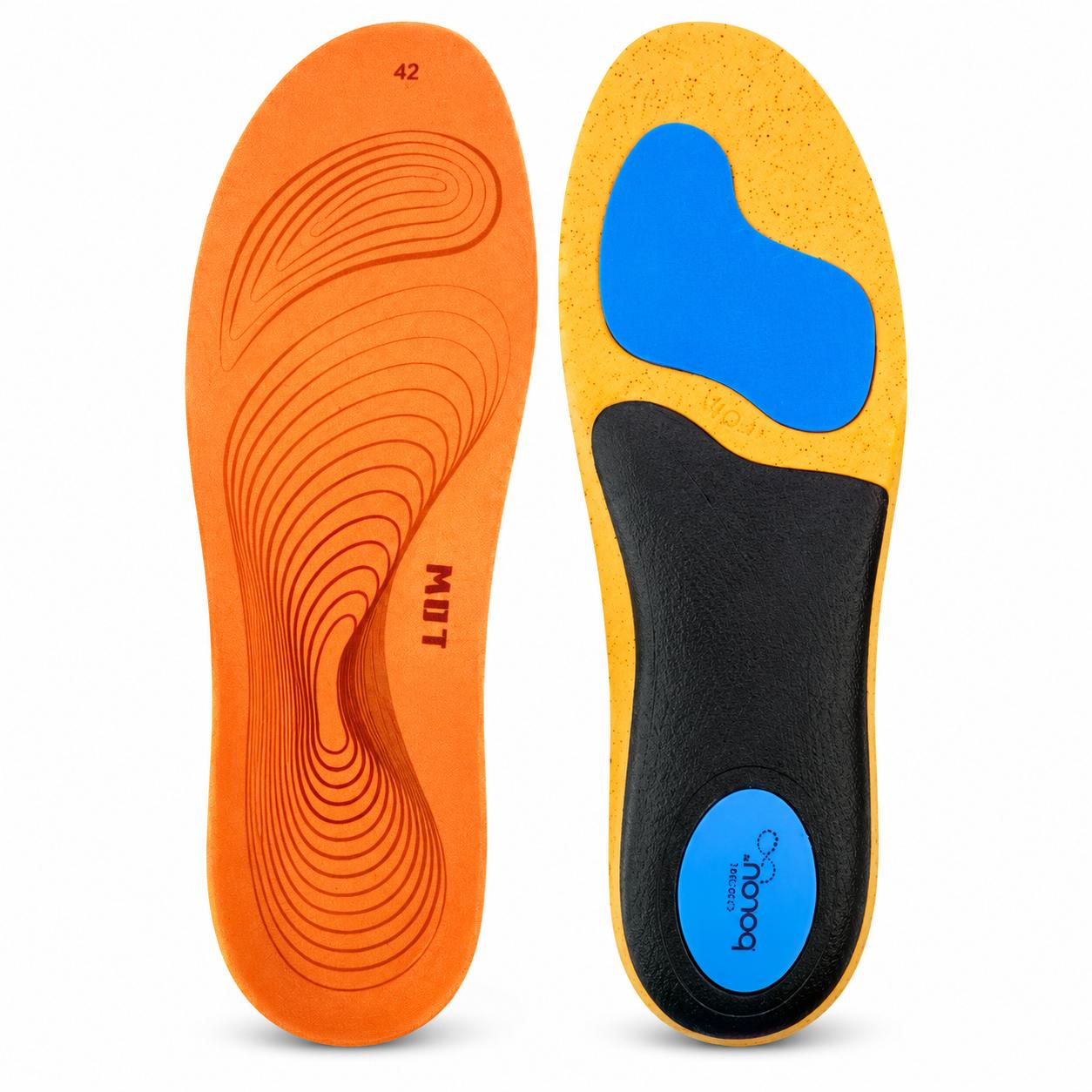
Both products sit inside a shoe and both are called an insole. The difference is not the material or the price bracket — it is what the shape was designed from. One is designed from an average foot. The other is designed from a number you supply.
Two different starting points
An off-the-shelf insole is built around a nominal size: a length, a medium arch, a medium heel. It is a reasonable compromise that fits a large share of people acceptably. A custom-fit insole starts from a measurement and a foot profile, and the shape is generated to suit that profile rather than to suit the middle of a distribution.
Where the off-the-shelf version stops
The limit is not quality, it is geometry. A medium arch under a high arch leaves a gap that the foot fills by rolling inward. A medium arch under a flat foot pushes up where there is no room for it. Neither is a manufacturing defect; the shape simply was not made for that foot. People usually describe the result as "it never quite settles" rather than "it hurts".
What printing changes
Printing lets the density of the structure vary across the product. A printed insole can be softer under the heel, firmer under the midfoot, and different again under the ball of the foot, in a single piece with no glued layers to separate. The support is not a slab of material cut to a shape — it is a lattice whose cells change size where the load changes.
Four profiles, four contours
The insoles here are grouped by foot profile rather than by shoe size, because the contour is what differs:
Mild flat feet — a contoured arch, a thicker inner forefoot edge and a U-shaped heel cup to keep the heel centred.
Severe flat feet — a deeper arch contour and a stronger inner-edge lift, because a flatter foot needs more support earlier in the roll.
High arches — a profile that follows the instep, with a thicker outer forefoot edge, since a high arch tends to load the outside of the foot.
Normal arches — a moderate contour with forefoot and heel cushioning and a firm midfoot, for neutral feet that mostly need balance rather than correction of anything.
How to tell which one you need
Wet your foot and stand on a hard floor, or look at the wear pattern on an old pair of shoes. An imprint that shows almost the whole sole points toward a flat profile; one that shows only heel and ball points toward a high arch; a clearly divided heel-and-ball imprint with a visible band along the outside is a fairly normal pattern. This is a rough orientation, not a diagnosis — if a foot is painful, a clinician is the right person to ask, and no insole article replaces that.
What stays the same
Breathability, everyday footwear compatibility and the fact that the product sits inside a shoe you already own. What changes is how much of the foot's own movement the surface follows, and how much of the day you stop noticing it. That is the part worth measuring for.
At a glance
- Category
- Insoles (7 products)
- Price range
- $29.99 – $99.99 USD
- Foot length covered
- 220–295 mm (EU35–EU46)
- Colour options
- up to 3
Where to go next
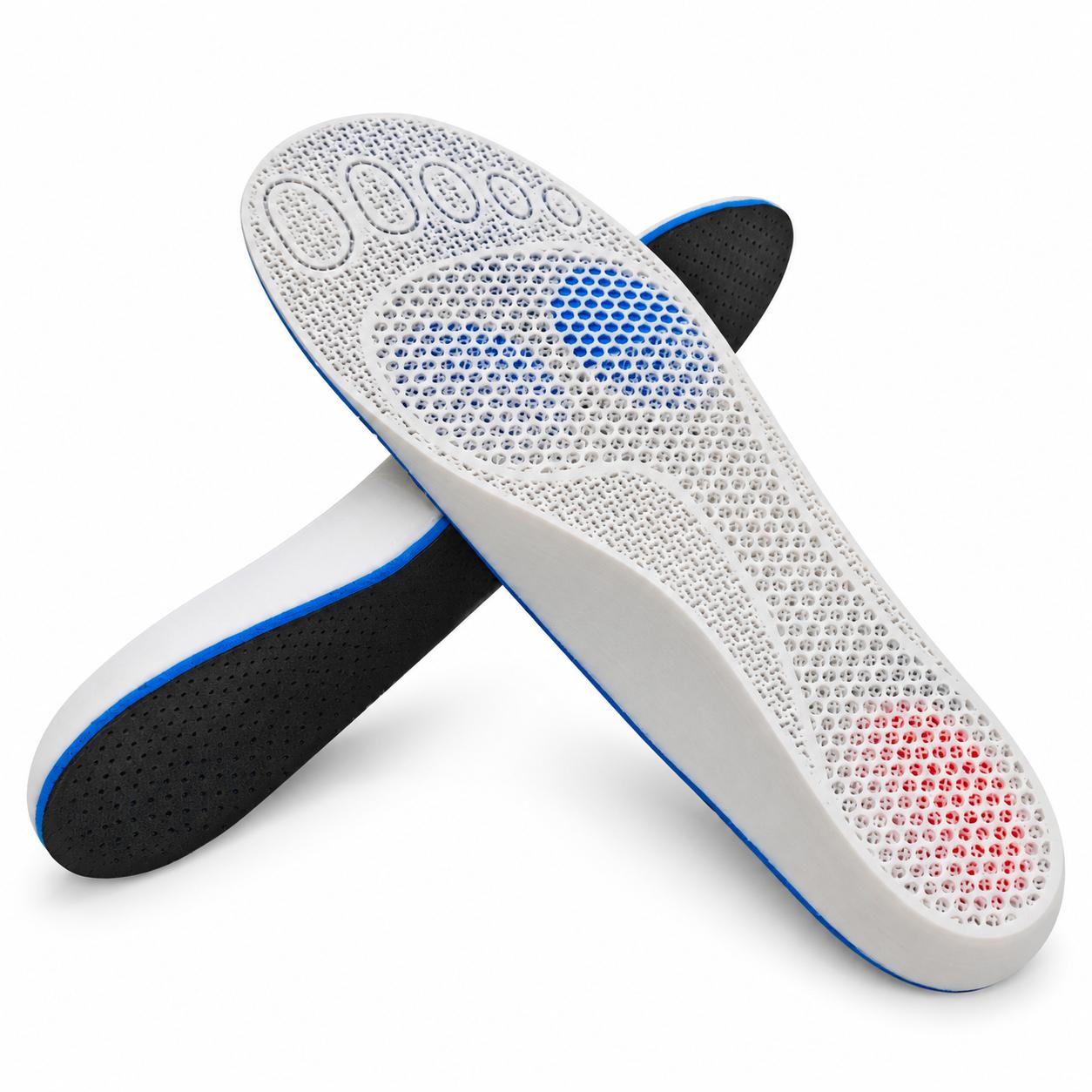 3D Printed Orthotic Insolesinsoles
- Healthy Insoles for Mild flat feetinsoles
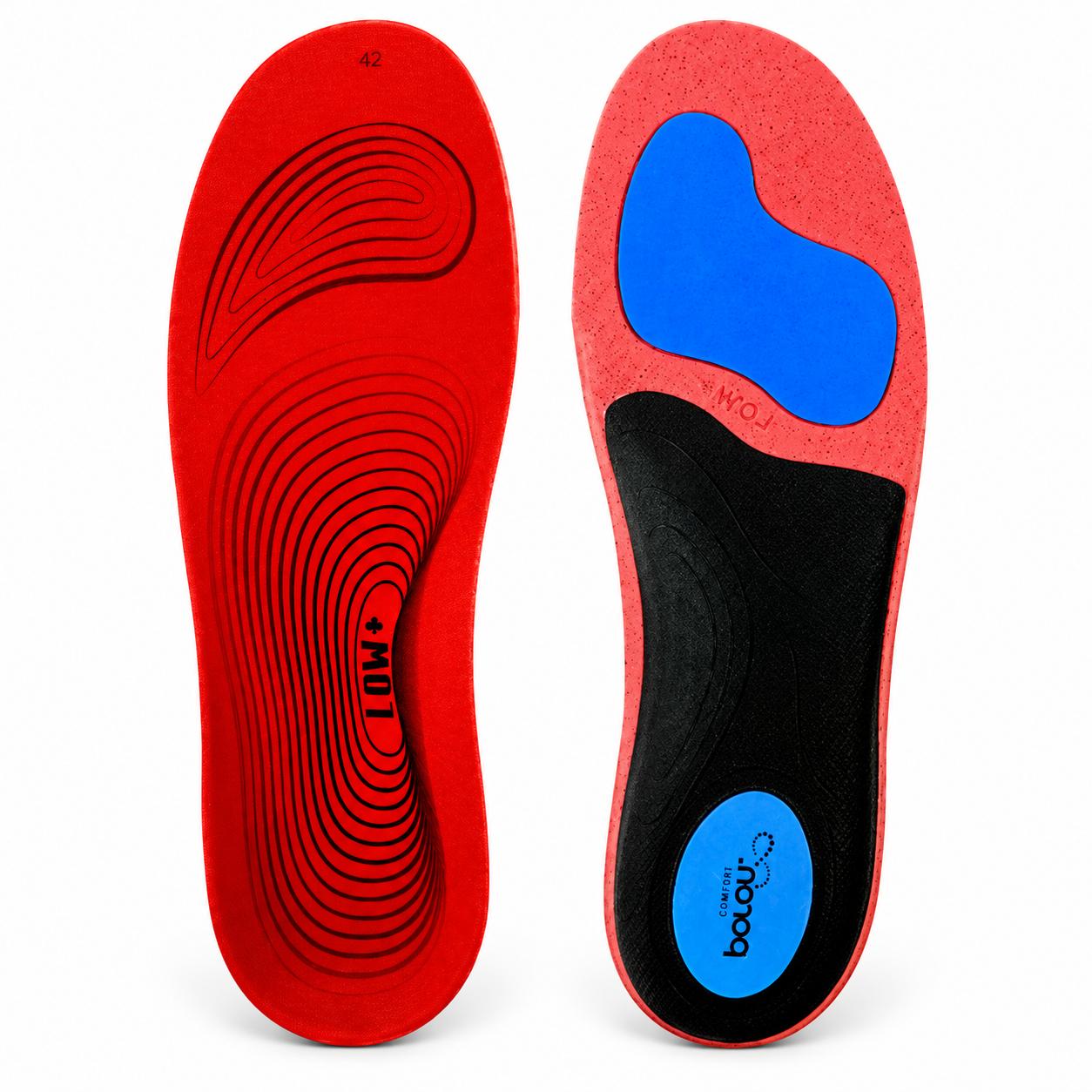 Healthy Insoles for Severe Flat Feetinsoles
XIANKU · Prices in USD · Shop all · About XIANKU · Shipping · FAQ · Contact · Privacy · Terms · Business